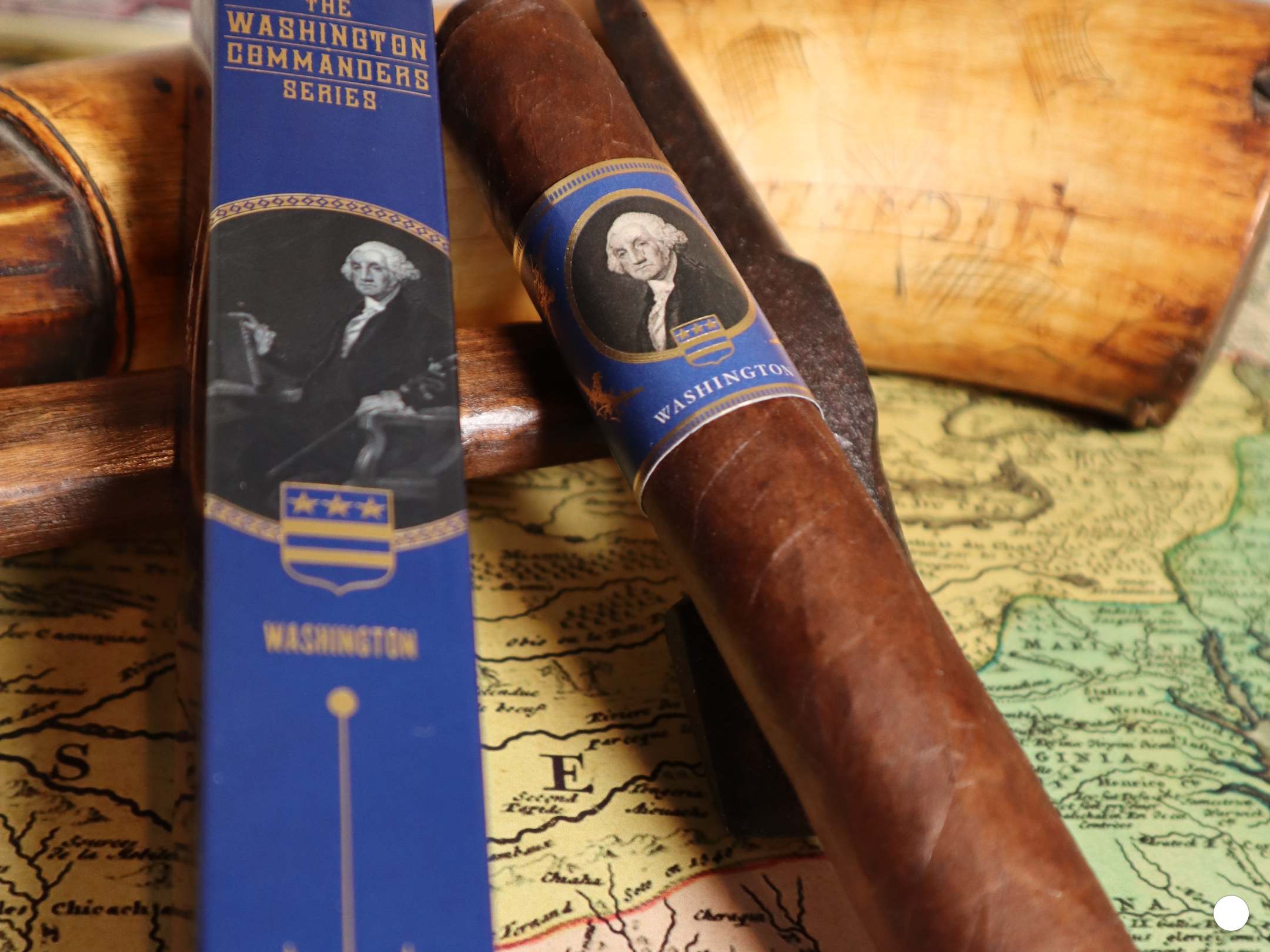
A Year With George Washington
On March 15, 1783, General Washington diffused what would become known as the Newburgh Conspiracy with a humble and moving address.
The situation at Newburgh was dire indeed. Though the fighting had ceased, another winter encampment, with its attendant ills, dragged on. Some of his men suffered from inadequate clothing, and his horses lacked forage, leaving them unable to mount, let alone ride into battle. Worse still, the national treasury was empty, and Congress gave no indication it would be replenished anytime soon, if at all.
The time at Newburgh should have been filled with rapture rather than dread. Washington didn’t know it at the time, but a preliminary peace agreement to end the war had been signed in Paris in November, and substantially upon terms more than satisfactory to the United States.
Other good news had come Washington’s way as he learned that his trusted General Nathanael Greene had entered the city of Charleston following its abandonment by the British. The re-occupation of Charleston brought with it the end of the war in the South.
Eight years of war had taken a toll on Washington’s health, too. While in camp at Newburgh, Washington noticed that his vision blurred when he read and wrote, as he often did. He took to borrowing various officers’ spectacles more and more. He finally gave in and ordered a pair for himself from David Rittenhouse in Philadelphia. Rittenhouse made them of silver and used a borrowed pair that Washington had judged he was able to see out of best as the model.
For Washington, the storm clouds rolled in on March 10, 1783, when he learned that a meeting of his officers had been called without his being informed. For a Commander-in-Chief, this was insubordination, but for Washington, who did not countenance a personal slight well, it bordered on mutiny.
In fact, that is exactly what it was. As there was no enemy to fight in the field, Congress became the object of the soldiers’ ire. The men who organized the meeting planned to incite their fellow officers into threatening Congress with violence if they did not keep their word and pay them as they promised.
Washington’s aide-de-camp, Alexander Hamilton, had recently left the army and joined the Continental Congress as a representative. He maintained his correspondence with his old commander and painted a bleak picture of his fellow congressmen’s inclination to satisfy the army’s needs now that peace was near at hand.
His advice to Washington was that “The claims of the army, urged with moderation but with firmness, may operate on those weak minds which are influenced by their apprehensions rather than their judgment. . . But the difficulty will be to keep a complaining and suffering army within the bounds of moderation.”
Washington’s returned letter to Hamilton paid heed to his advice but was adamant that a strategy such as Hamilton proffered would only “excite jealousy and bring on its concomitants.” In a follow-up letter, the ever-wise Washington cautioned Hamilton that his soldiers weren’t “mere puppets” and that men-at-arms were “a dangerous instrument to play with.”
Having learned of the meeting and learned that a soldier named Colonel Walter Stewart had informed the officers that public creditors had endorsed a mutiny to help bring about payments on their debts, and that even some congressmen subscribed to the plan as a means to force the states to send the funds they had pledged, Washington cancelled the planned officers’ meeting and scheduled one of his own for March 15th at noon.
Though Washington had rescheduled the meeting, hoping that the extra time and his public acknowledgement of it would calm the soldiers’ nerves, his officers did not expect him to attend. The meeting was held in the same place as the previous mutinous gathering was to have been held, a recently constructed building ironically called the Temple of Virtue.
When the crammed meeting began, unbeknownst to the officers in attendance, Washington slipped in a side door. For a man normally known for his enormous powers of self-restraint, one observer noticed that he was “ sensibly agitated” as he made his way to the podium.
Washington stood before the hostile throng and removed from his breast pocket prepared remarks, nine pages in length. After upbraiding them for their ungentlemanly conduct and pleading with them that Congress was not deliberately ignoring their demands, he took a more personal tone.
“If my conduct heretofore has not evinced to you that I have been a faithful friend to the army, my declaration of it at this time w[oul]d be equally unavailing and improper. But as I was among the first who embarked in the cause of our common country. As I have never left your side one moment, but when called from you on public duty. As I have been the constant companion and witness of your distresses and not among the last to feel and acknowledge your merits . . . it can scarcely be supposed at this late stage of the war that I am indifferent to [your] interests.”
His words softened the angry soldiers before him, but it was his next gesture that moved them to tears. Washington, possibly teary-eyed himself, required the aid of his new spectacles and withdrew them from his coat. “Gentlemen, you must pardon me,” he lamented. “I have grown gray in your service and now find myself growing blind.” All were silent.
The tension in the room had dissipated when the noble general exited the room moments later. Washington’s humble words and the touching display of his humanity had deeply affected his officers. So much that they unanimously approved a resolution affirming that they “reciprocated [ General Washington’s] affectionate expressions with the greatest sincerity of which the human heart is capable.”
Washington had promised his men that he would exercise the same exertions in ensuring that Congress kept its word as he did in prosecuting the war. He kept that promise by writing forcefully and often for his men. He even warned them that they should not count on him to “dispel other clouds, if any should arise, from the causes of the last” and that they should make every possible effort to make good on their pledges.
Despite Congress’s failures, good fortune continued when the Treaty of Paris was signed in September of that year, ending the Revolutionary War and securing American independence.
Washington did not know it as he made his way to “retirement” at Mount Vernon, but his life in the service of his men and his country was far from over. But for now, he could rest and be comforted that time and time again, he had done for America as no other man could.