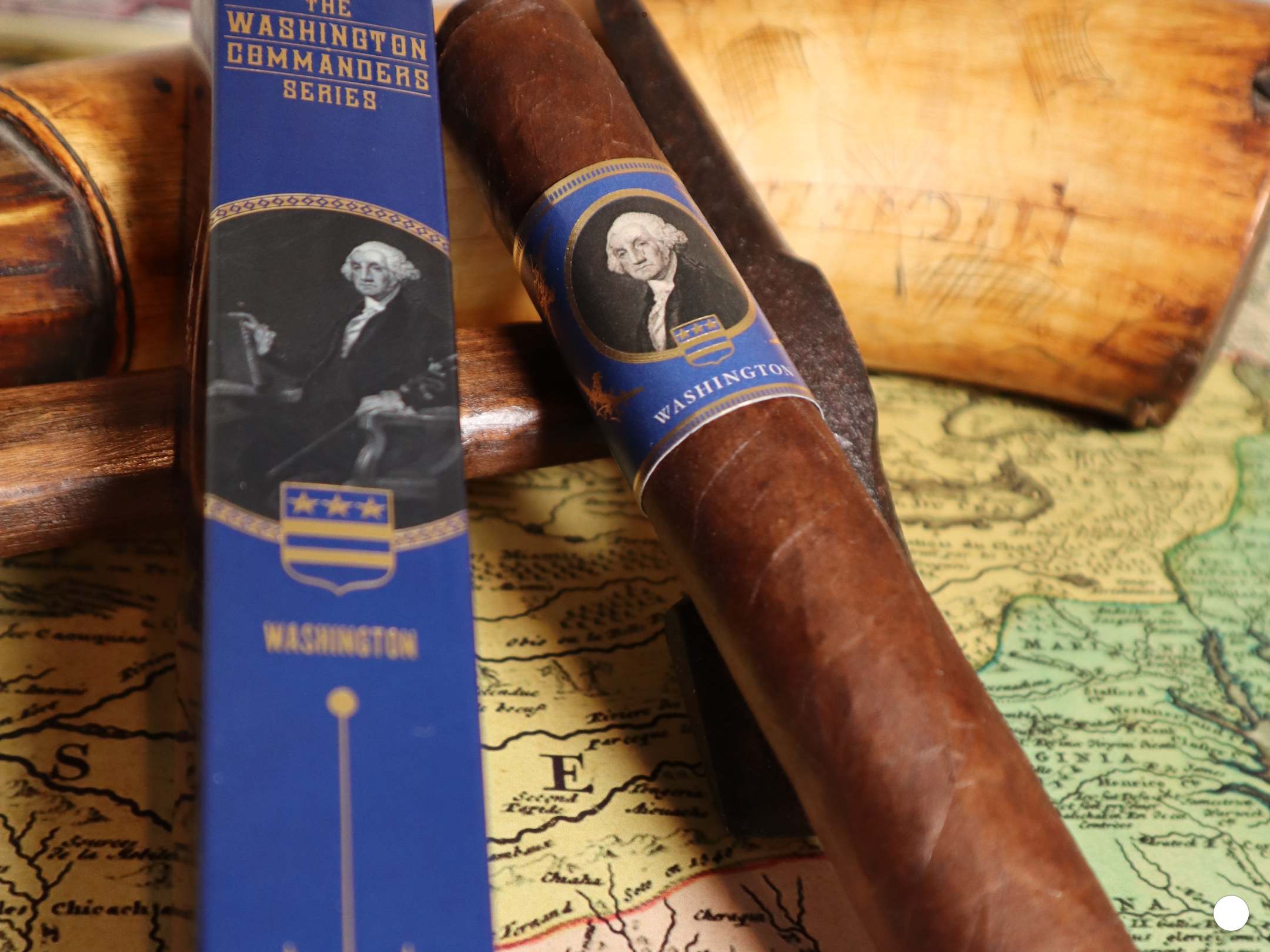
On January 12th, 1792, President Washington appointed Thomas Pinckney as the first United States minister to Great Britain.
Pinckney already had an impressive career before his appointment. Not long after the Battles of Concord and Lexington in 1775, he, along with his brother Charles, enlisted in the Continental Army. He was given the rank of Captain and served as an aide-de-camp under General Horatio Gates and endured more than his fair share of combat.
Promoted to major at twenty-nine years old and thrust into battle once more, Pinckney was struck by a redcoat musket ball in the thigh at the Battle of Camden. The wound, a ghastly compound fracture, was so severe that his British captors thought it mortal, and thus permitted Pinckney to “recover” from his wounds at his mother-in-law’s plantation just outside Charleston. His doctors did an incredible job treating him, and with the care administered by those close to him, he was soon rehabilitated and able to mount a horse.
Now well enough to travel, the British released the young major in a prisoner exchange in 1781, and he promptly rejoined the army under the Marquis de Lafayette in Virginia. Later that year, he bore witness to the defeat of Cornwallis at Yorktown, a satisfying turn of events for those who had wounded and captured him at Camden.
With the signing of the Treaty of Paris in 1783, ending the war, Pinckney turned his attention to his plantations and law practice. The call of service came soon, however, and in 1787, at the urging of a friend, he ran for governor of South Carolina and was elected handily. During his tenure as governor, he called for and presided over the state convention, which debated and ratified the newly wrought Constitution.
In 1792, President George Washington appointed Pinckney Minister to Great Britain. Washington, who wanted the nascent republic to steer clear of war with any nation, at almost any cost, issued clear instructions. Pinckney was to convey a spirit of “sincere friendship” and to seek the liberation of American commerce from onerous British regulations.
Pinckney, try as he might, was unable to transpose the British attitude toward American commerce. Washington soon sent John Jay as a special envoy to try his hand at moving the needle. Jay was successful in negotiating a treaty, and fortunately for Pinckney, his efforts in the accomplishment faded into the background.
Though Washington was pleased, many Americans were incensed at what they perceived as capitulation to their former foe. Jay was burned in effigy in hamlets and towns nationwide. He once remarked that he could make his way in the dark across the country by the light of his burning effigies. One of his many detractors colorfully exclaimed, “Damn John Jay! Damn everyone who won’t damn John Jay!! Damn everyone that won’t put lights in his windows and sit up all night damning John Jay!!!”
Though he helped bring about the unpopular Jay’s Treaty, Pinckney was not branded with the infamy of the treaty’s namesake. Washington appointed Pinckney to negotiate a Treaty with Spain, which still controlled navigation on the Mississippi River and restricted America’s westward expansion, owing to lingering multinational boundary disputes.
In direct contrast with Jay’s Treaty, Pinckney’s Treaty, or the Treaty of San Lorenzo, as it is also known, was particularly well-received. The treaty has had far-reaching ramifications that still reverberate today.
The United States was guaranteed unfettered navigation rights on the Mississippi River, opening up worldwide markets for American produce. Additionally, the long-standing and ongoing border dispute, commonly referred to as the West Florida Controversy, was settled. This laid the groundwork for the Louisiana Purchase and for what would come to be known as “manifest destiny” in the American lexicon. The new states of Alabama, Mississippi, and Louisiana would soon be created from the newly created territory.
The Pinckney Treaty was a sorely needed salve for Washington, as he was still chafed from the scorn and vitriol brought about by Jay’s Treaty. Though he knew he was right to endorse it (it did provide a sorely needed decade and a half delay of inevitable hostilities with Great Britain), it still stung. The Democratic-Republicans, led by Thomas Jefferson, were working tirelessly behind the scenes to undermine any reconciliation with America’s former oppressor.
After serving under George Washington in his administration, Pinckney threw his hat in the ring for President in 1796. He placed third behind John Adams and Thomas Jefferson, who were elected President and Vice President, respectively.
Thomas Pinckney, now in his late forties, was elected to the House of Representatives in 1797 and served one term before retiring again to his plantations. When war broke out in 1812, James Madison called him forth to serve and commissioned him a Major General, and gave him command of the Southern Division of the U.S. Army. From that post, he directed the fortification of the coast and waterways and was in overall command of the war with the Creek Indians to the west.
After the Treaty of Ghent ended the second war with Great Britain, Pinckney retired again to his El Dorado plantation on the Santee River in South Carolina. In the waning years of his life, he served as President General of the Society of Cincinnati, a fraternal institution founded for the military officers and their descendants who served in the Revolutionary War. On November 2nd, 1828, Pinckney died, aged 78, in Charleston, South Carolina.
Thomas Pinckney, regrettably, is one of hundreds of extraordinary Americans, long forgotten. He answered the call to service from the very beginning and throughout his life, never minding the cost to his fortune and health. His lifelong endeavors, though scarcely remembered, are no less important now than they were then. His life was extraordinary by most any standard, and it is we, the living, who have reaped the rewards.
We must take the time to remember Thomas Pinckney and the scores of others like him, not as much for his sake, but for ours.